One of your best performers hands you a resignation letter, and you never saw it coming. That's typical for strong employees. They rarely complain or slow down before they leave, which makes it easy to miss what's really happening.
And since the warning signs are often subtle, many managers assume it comes down to money or ambition. They focus on counteroffers and exit interviews, but people rarely wake up one day and decide to leave. The decision usually builds over months of feeling overlooked, undervalued, or managed in a way that slowly wears them down.
This article breaks down five specific leadership habits that drive good employees away, and how to tell if your own management style is the cause. You'll also get a clear starting point for turning things around before you lose the next one.
But first, let's look at why top performers leave without giving you any warning at all.
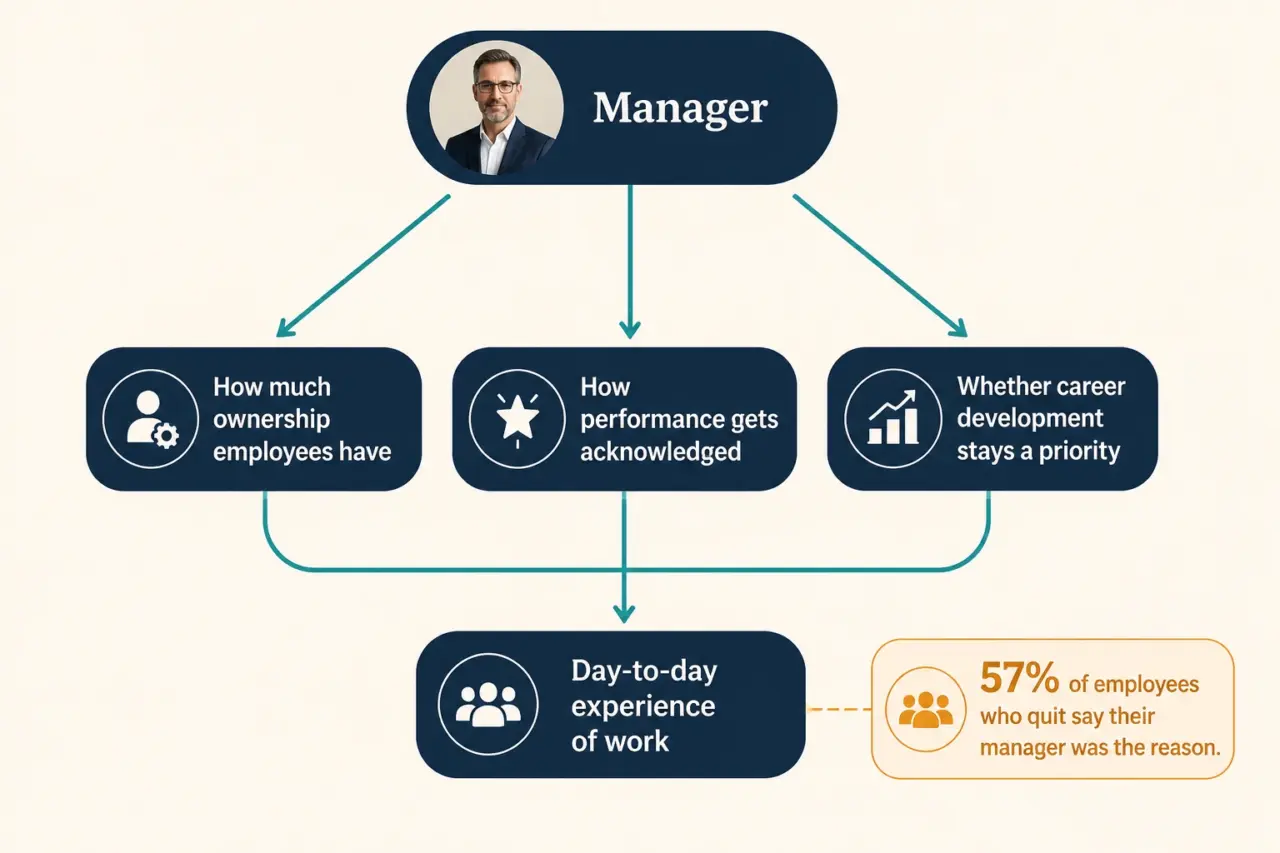
Surprisingly, the main reason top performers leave is their manager. In fact, 57% of employees who have quit a job say their manager was the reason. We often hear from workers who felt their efforts went unrecognised or that promised growth never materialised. Eventually, leaving felt like the only option.
That happens because managers have more influence over the day-to-day experience of work than any other role in a business. They decide how much ownership employees have, how performance gets acknowledged, and whether career development remains a priority. When those areas are neglected, even high performers become more receptive to opportunities elsewhere in the job market.
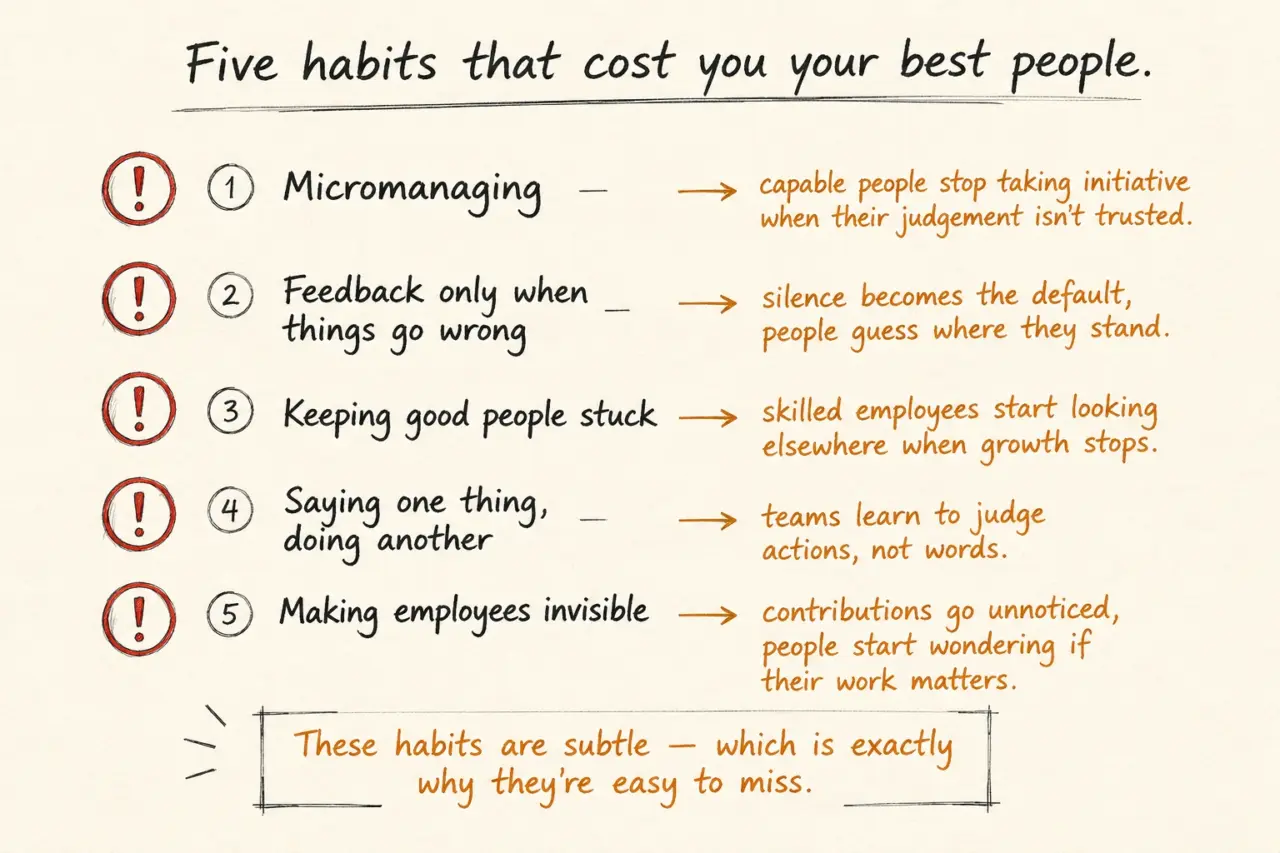
Fixing retention doesn't mean watching your team more closely or tightening your grip on how work gets done. Often, the habits that push good staff out are far more subtle than that, which is exactly why they're easy to miss. The five behaviours below are some of the most common leadership patterns that end up costing businesses their best people.
Picture a senior employee hired specifically for their judgement. But as they start working, every one of their decisions gets reviewed. And within a few months, they stop taking initiative altogether because waiting for sign-off has become easier than acting.
That's what micromanagement does. It tells capable personnel that their judgement isn't trusted (intentional or not). Over time, they stop bringing ideas forward, avoid making decisions on their own, and do only what's expected of them. Some disengage, while others leave for a workplace that actually trusts them.
If the only time a team member hears from you is when something's gone wrong, they'll start associating feedback with criticism. Eventually, silence will become the default, which will leave people guessing whether they're meeting expectations or simply being overlooked.
Something as simple as "good work on that" after a well-handled task can shift how a staff member feels about showing up. It tells your team that you're paying attention to more than just their mistakes.
Skilled employees expect new responsibilities and opportunities as they gain experience. When that doesn't happen, even people who genuinely enjoy their job can start feeling boxed in.
That feeling grows each time something disappointing happens. It could be a promotion getting pushed back, an interesting project going to someone else, or a development conversation that never seems to happen. Before long, they stop waiting and start looking for a workplace where growth is part of the job.
Your team pays close attention to whether their leaders follow through on what they say. Promising flexible hours, then questioning every time someone leaves early, is a fast way to lose credibility with the entire team.
The same goes for promises about promotions, raises, or project ownership that never materialise. When leaders fail to follow through, employees learn to judge actions rather than words.
When contributions go unnoticed, team members start to wonder if their work matters at all. This shows up in small ways, like credit for a project going to whoever presents it, or a project manager forgetting who actually solved the problem.
That said, you don't have to do anything grand. A specific, timely mention in a team meeting does more for an employee's motivation than a generic thank you sent weeks later.
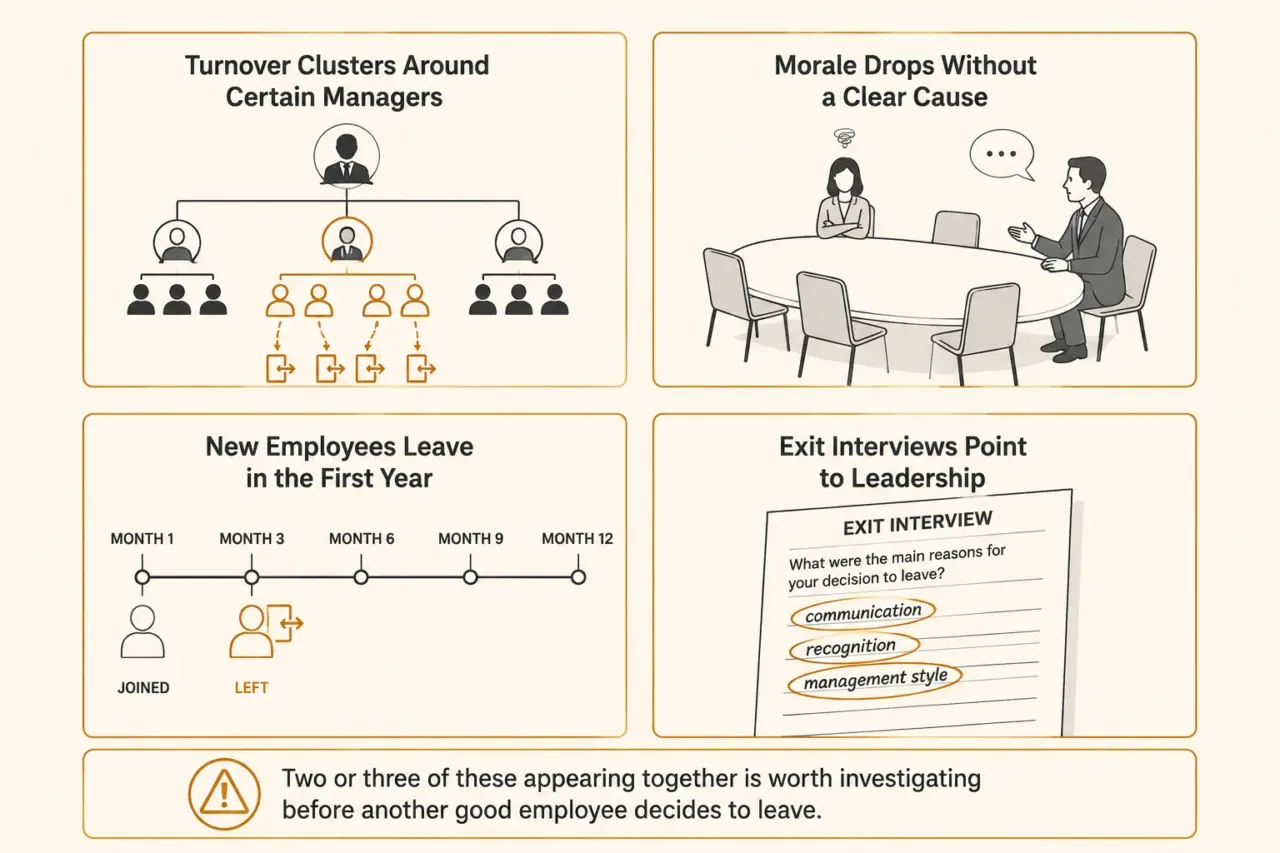
Pinpointing a specific issue within a business can be difficult, especially when you're deep in the day-to-day of running it. Fortunately, the signs of a leadership-driven retention problem are easier to spot once you know what to look for. These are some of the most common ones:
None of these signs proves anything on their own. But when two or three of them start appearing together, they're worth investigating before another good employee decides to leave. When we speak with businesses struggling with retention, it's almost always these small patterns that reveal where leadership needs to improve.
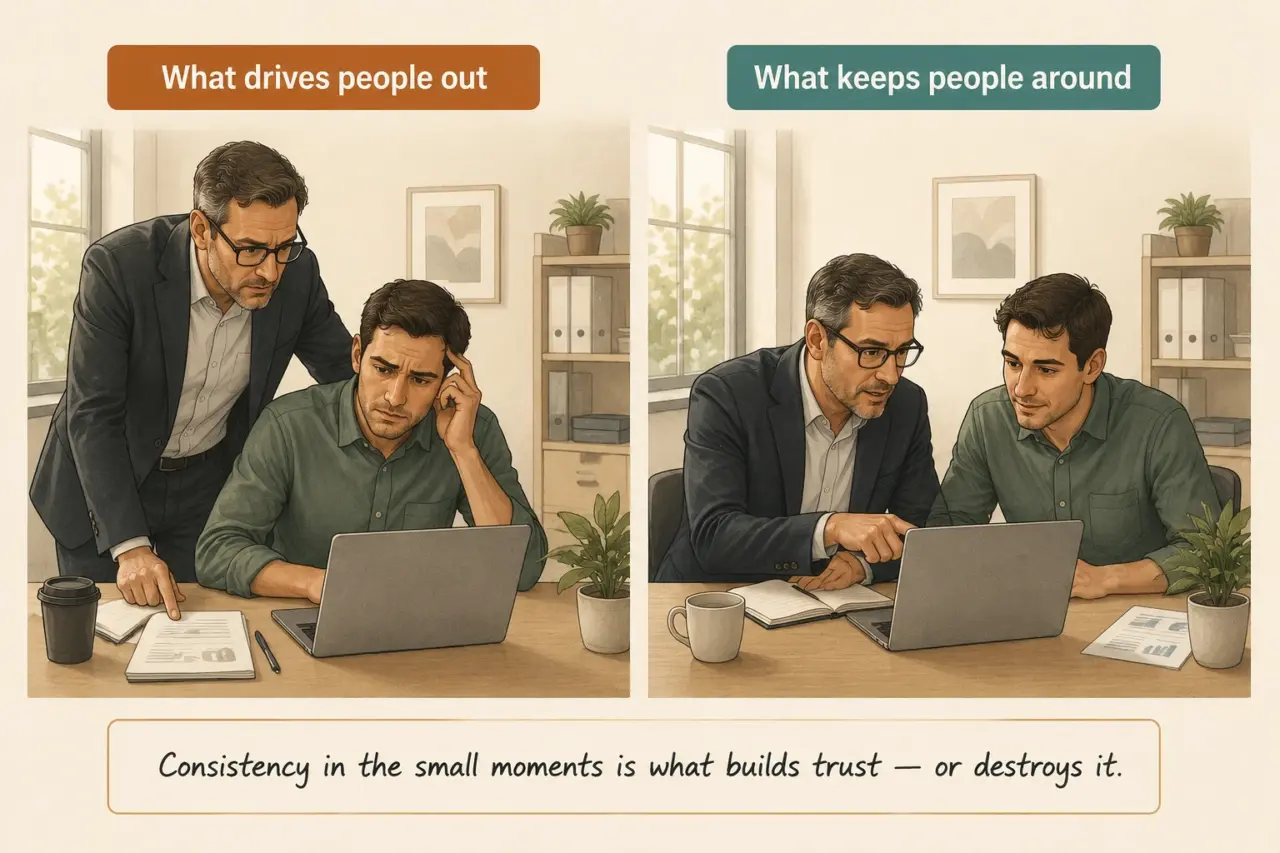
Better leaders keep their word, trust their team to do the job they were hired for, and recognise good work when they see it. They also create a positive work environment where people know what's expected of them and feel comfortable contributing ideas.
And none of that requires perfection. Your leadership just has to be consistent. These everyday habits are some of the most effective employee retention strategies because they build trust and give good people a reason to stay.
You don't need to fix all five habits this week. Pick the one that sounds the most familiar, and start there first. Building better leadership is usually the result of small, consistent improvements rather than one major change.
And if you're not sure where your own leadership style is falling short, an outside perspective helps. Brisbane Business Coaching works with leaders to spot these blind spots early, well before they turn into resignations.
Book a session with our team and get a clear, practical plan to keep your best people around for longer.
If you're still weighing up how leadership affects employee retention, these answers cover a few of the questions we hear most often.
Not always. Some turnover is healthy, particularly when it involves poor-fitting hires or natural career progression. But when good, high-performing employees keep leaving the same team, leadership is usually worth examining before assuming the hiring process is the issue.
Small teams often handle retention through day-to-day leadership rather than structured retention programs. Because one manager's behaviour affects everyone, small improvements in communication, recognition, and trust are usually noticed much more quickly.
Yes, but only if it's backed up by good leadership afterwards. A strong onboarding process helps new employees settle in faster and feel supported from day one. But if their day-to-day experience doesn't match that positive start, they're unlikely to stay for long.
Company culture is largely shaped by how managers behave day to day. When leaders build trust, communicate openly, and reward good work consistently, that becomes the culture. Employees who feel that their workplace genuinely supports them are far more productive and far less likely to leave.
Top talent tends to leave when they feel the job is consuming more than it should. Leaders who respect boundaries, distribute workloads fairly, and don't reward overwork with more overwork create an environment where employees can perform well without burning out.

Copyright 2020-2026 © Matter Solutions Pty Ltd